The fat & the sculpting
VASER liposuction
Ultrasound-assisted VASER liquefies and removes the fatty component precisely while tightening the overlying skin, letting the chest be sculpted to a defined, masculine shape rather than simply emptied.
Men’s Surgery · Abu Dhabi & Dubai
Gynecomastia surgery removes the excess gland and fat that create a puffy or enlarged male chest, returning a flat, firm, masculine contour. Dr. Paulo Michels tailors the technique to your chest — VASER sculpting, gland removal and plasma skin tightening — in most cases with no visible scar.
Overview
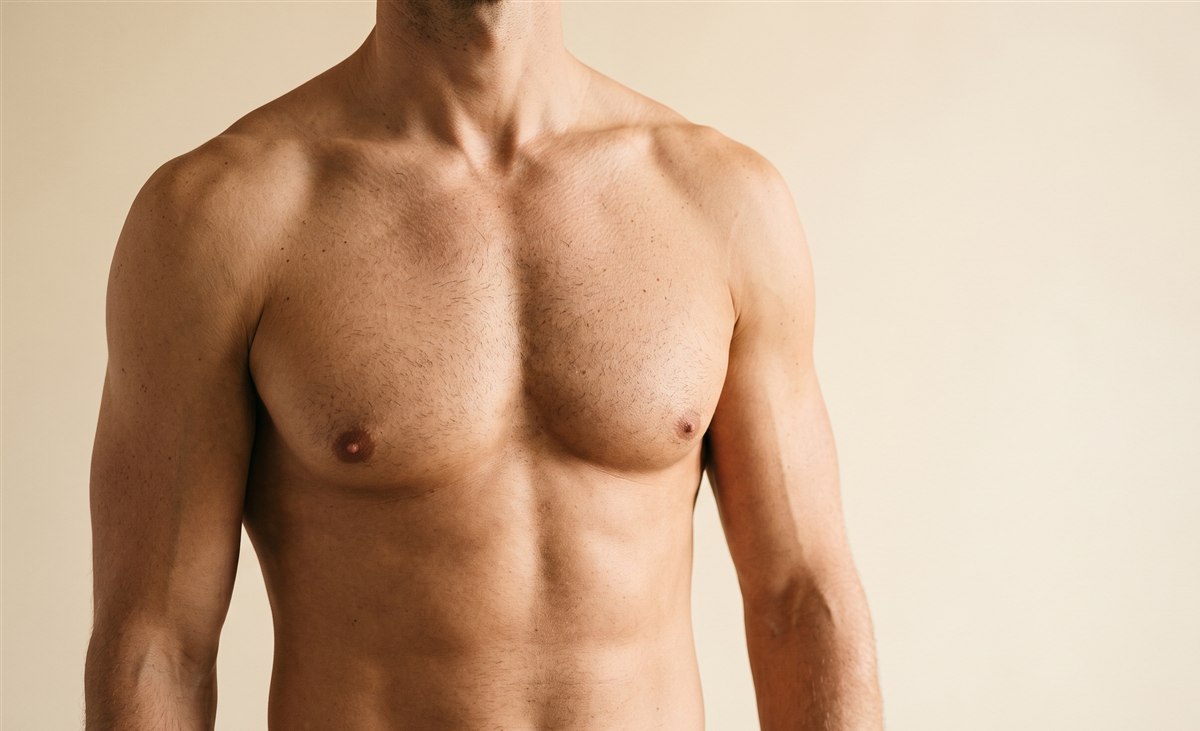
Gynecomastia is the enlargement of the male breast — a puffy nipple, a firm disc of tissue under the areola, or a fuller, more feminine-looking chest. It is common at every age, often resistant to diet and training, and a frequent source of self-consciousness in and out of clothing.
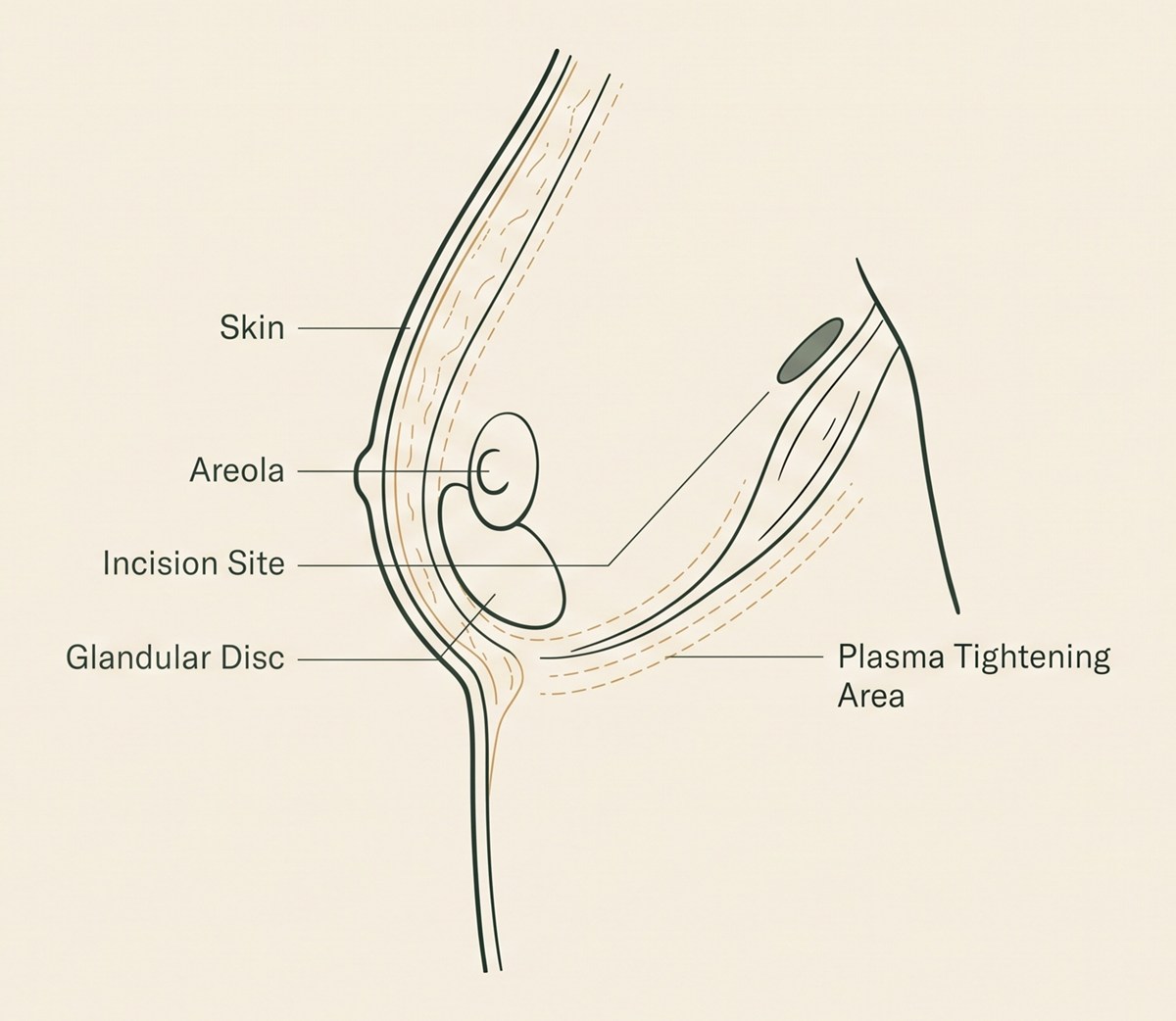
Surgery is the definitive treatment. Depending on your chest, it combines VASER liposuction to remove excess fat and sculpt the pectoral shape, direct excision of the firm glandular disc through a tiny incision at the edge of the areola, and plasma skin tightening to retract the skin — each used as your case needs.
The result is a flatter, firmer, naturally masculine chest with the puffiness of the nipple corrected — and, because the gland is removed, it does not simply grow back.
Gland or fat?
Not every enlarged male chest is the same, and the difference decides the operation. This is why an examination — feeling for the firm disc of gland behind the nipple — matters more than any single technique.
A firm, rubbery disc of glandular tissue sits directly beneath the nipple. It is dense, does not respond to weight loss, and often makes the nipple puffy. This gland must be physically removed — liposuction alone cannot clear it.
The fullness is fatty tissue rather than gland, common with weight gain. It is soft and even, without the firm disc. This responds beautifully to VASER liposuction and skin tightening — often without any gland excision.
Causes
It usually comes from a hormonal shift — the balance of oestrogen and testosterone — at puberty, with ageing or weight change. It can also follow certain medications and anabolic steroids, and occasionally an underlying condition. At consultation any reversible cause is identified first; once addressed, surgery gives a definitive, lasting correction.
The technique
There is no single operation — the technique is matched to your chest. In the majority of cases the whole treatment leaves no visible scar: through a few tiny liposuction ports, VASER liposuction removes the fatty component and sculpts a defined pectoral shape, and the skin is retracted with plasma.
Only when there is a more voluminous, firm glandular disc is a small incision added at the edge of the areola to remove it directly (a “pull-through”) — the one situation that leaves a discreet periareolar scar, well hidden by the natural colour change. Skin itself is removed only in the most severe cases with significant loose skin.
For men who want more than a flat chest, UGRAFT fat transfer to the pectoral muscle can be added as an option — refining and defining the pectoral contour for a more athletic, sculpted result.
The fat & the sculpting
Ultrasound-assisted VASER liquefies and removes the fatty component precisely while tightening the overlying skin, letting the chest be sculpted to a defined, masculine shape rather than simply emptied.
The gland · when needed
When the firm disc behind the nipple is more voluminous, it is removed through a small incision at the edge of the areola — the only case that leaves a scar, hidden by the natural colour change. Removing the gland is what flattens a puffy nipple and prevents regrowth.
Optional · definition
For men wanting an athletic chest, the patient’s own fat can be grafted into the pectoral muscle to add projection and definition — an optional refinement layered onto the reduction.
The skin
After the bulk is removed, the skin needs to shrink back to the new, flatter chest. Dr. Paulo Michels does this from underneath the skin wherever possible — avoiding the long scars of skin excision.
Subdermal plasma energy is passed under the skin to make it contract and retract onto the new contour — no skin is removed and no scar is added. It suits the great majority of chests, including those with moderate looseness.
In severe gynecomastia with major excess skin (Grade III, often after very large weight loss), some skin must be removed and a scar accepted. This is reserved for the cases that genuinely need it — and explained fully beforehand.

Our philosophy
How it is graded
The Simon classification maps the enlargement and how much skin is involved — and that grade guides whether liposuction, gland excision, plasma or skin removal is needed.
Small enlargement localised around the areola, with no excess skin. Often a puffy nipple.
Moderate enlargement spread across the chest, still with no excess skin.
Moderate enlargement with minor skin excess — usually managed with plasma tightening.
Marked enlargement with significant loose skin, where some skin resection may be required.
Comfort & healing
The experience is engineered to be comfortable and to heal into the finest possible scar — barely visible at the edge of the areola.
Modern anaesthesia
Complete, safe unconsciousness without inhaled gases — precise control, a smooth and rapid wake-up, and near-zero postoperative nausea, so you recover clear-headed and comfortable.
Pain-free wake-up
Targeted nerve blocks placed under ultrasound while you are asleep numb the chest-wall nerves, so you wake with zero surgical pain — sharply reducing strong painkillers and speeding your return to normal life.
Refined closure
In most cases the tiny liposuction ports leave no visible scar. When a periareolar incision is needed for a larger gland, it sits at the areola border where the colour change hides it — closed with waterproof surgical glue, no external stitches, and fading to near-invisible.
Book a private consultation with Dr. Paulo Michels — an honest assessment of whether your chest is gland, fat or both, and the tailored technique that will correct it with the smallest possible scar.
Recovery
Recovery is quicker than most expect — it is largely liposuction with a small excision. The nerve blocks and glued closure make the first days easy, and most men are back at a desk within a week.
You wake with no surgical pain from the nerve blocks. A compression vest is worn from the start; the waterproof closure lets you shower early. Discomfort is mild and easily managed.
Swelling and bruising settle. The vest is worn day and night. Most men return to desk work in about 5–7 days, depending on how physical the job is.
The vest is worn for 4–6 weeks to control swelling and help the skin retract smoothly onto the new, flatter contour.
Light activity builds back gradually; full training and chest workouts resume at around 3–4 weeks.
The swelling resolves and the chest settles into its final, defined shape over 3–6 months.
Candidacy
Good to know
Honest risks
Gynecomastia surgery is safe and highly satisfying, but it has honest trade-offs: in gland-heavy cases a small areolar scar (usually near-invisible), temporary numbness or changes in nipple sensation that recover, some early swelling or firmness, a rare need for minor revision to perfect symmetry, and the normal healing risks — all minimised by careful technique and the compression programme, and discussed fully at your consultation.
Patient stories
“I’d hidden my chest at the beach for years. Flat and firm now, and honestly you can’t see the scar. Wish I’d done it earlier.”VASER + gland excision
“Mine was mostly the firm gland under the nipple. He removed it through a tiny cut on the areola — the puffiness is completely gone.”Puffy nipple correction
“He tightened the skin with plasma instead of cutting it, and added fat to my pecs. The chest looks athletic, not just flat.”Plasma + pectoral graft
Investment
Every chest is different, so there is no single price. A personalised quotation follows an in-person assessment. The main factors:
In line with UAE medical-advertising regulations, prices are shared privately in consultation rather than published.
FAQ
Gynecomastia is enlargement of the male breast — a puffy nipple, a firm disc of glandular tissue under the areola, or a fuller, more feminine-looking chest. It is very common, affects men of every age, and is often resistant to diet and exercise because the firm gland does not respond to weight loss.
Both are possible. True gynecomastia has a firm, rubbery disc of gland directly under the nipple that must be surgically removed; pseudogynecomastia is soft fatty tissue that responds to liposuction. An examination — feeling for the disc — decides which you have and therefore which technique is needed.
Usually a hormonal shift in the balance of oestrogen and testosterone — at puberty, with ageing or with weight change. It can also follow certain medications, anabolic steroids, or occasionally an underlying condition. Any reversible cause is identified at consultation before surgery is planned.
Pubertal gynecomastia can settle within a couple of years. Once it has been present in an adult for more than a year or so, the gland is usually established and will not disappear with diet or training — surgery is then the definitive treatment.
The technique is matched to your chest. Most cases combine VASER liposuction to remove fat and sculpt the shape with direct excision of the firm gland through a small incision at the edge of the areola. Purely fatty chests may need liposuction alone; gland-heavy chests lead with excision.
In most cases there is no visible scar — the treatment is done through a few tiny liposuction ports. Only when a more voluminous gland must be excised is a small periareolar incision used, hidden at the areola border and fading to near-invisible. Longer scars from skin removal are reserved for severe gynecomastia with significant excess skin.
With subdermal plasma (Renuvion) energy passed under the skin to make it contract onto the new, flatter chest — no skin is removed and no scar is added. Skin excision is only used in severe cases with major excess skin.
Yes, optionally. For men who want an athletic chest rather than simply a flat one, the patient’s own fat can be grafted into the pectoral muscle (UGRAFT) to add projection and definition, layered onto the reduction.
Most patients wake with zero surgical pain thanks to ultrasound-guided PECS nerve blocks placed during surgery, combined with modern TIVA anaesthesia that gives a smooth wake-up and almost no nausea.
Most men return to desk work in about 5–7 days, wear a compression vest for 4–6 weeks, and resume full training and chest workouts at around 3–4 weeks. The chest settles into its final defined shape over three to six months.
Because the gland is physically removed, the treated tissue does not grow back. However, significant weight gain, anabolic steroid use or a new hormonal cause can create new tissue, so a stable weight and avoiding steroids keep the result lasting.
Yes. Anabolic steroids are a common trigger for glandular gynecomastia and can cause it to return even after surgery. For a durable result it is important to stop steroid use; this is discussed openly and without judgement at consultation.
Enquiry
Leave your details and Dr. Paulo Michels’ team will reply personally — or message on WhatsApp.