☎ +971 50 106 7981·WhatsApp·Elyzee Hospital, Abu Dhabi

Breast Surgery · Abu Dhabi & Dubai

Breast Augmentation — Natural, Proportional

Elegant breast enhancement built around your anatomy — never “over-filled”. Every implant is planned by measurement and 3D simulation, placed for a natural upper-pole slope, supported with an internal bra, and backed by a fast-recovery protocol that returns most patients to normal life in 24–48 hours.

  • {{ic-wave}}Measured &
    3D-planned
  • {{ic-shield}}Internal-bra
    support
  • {{ic-heart}}Back to life
    24–48 hrs
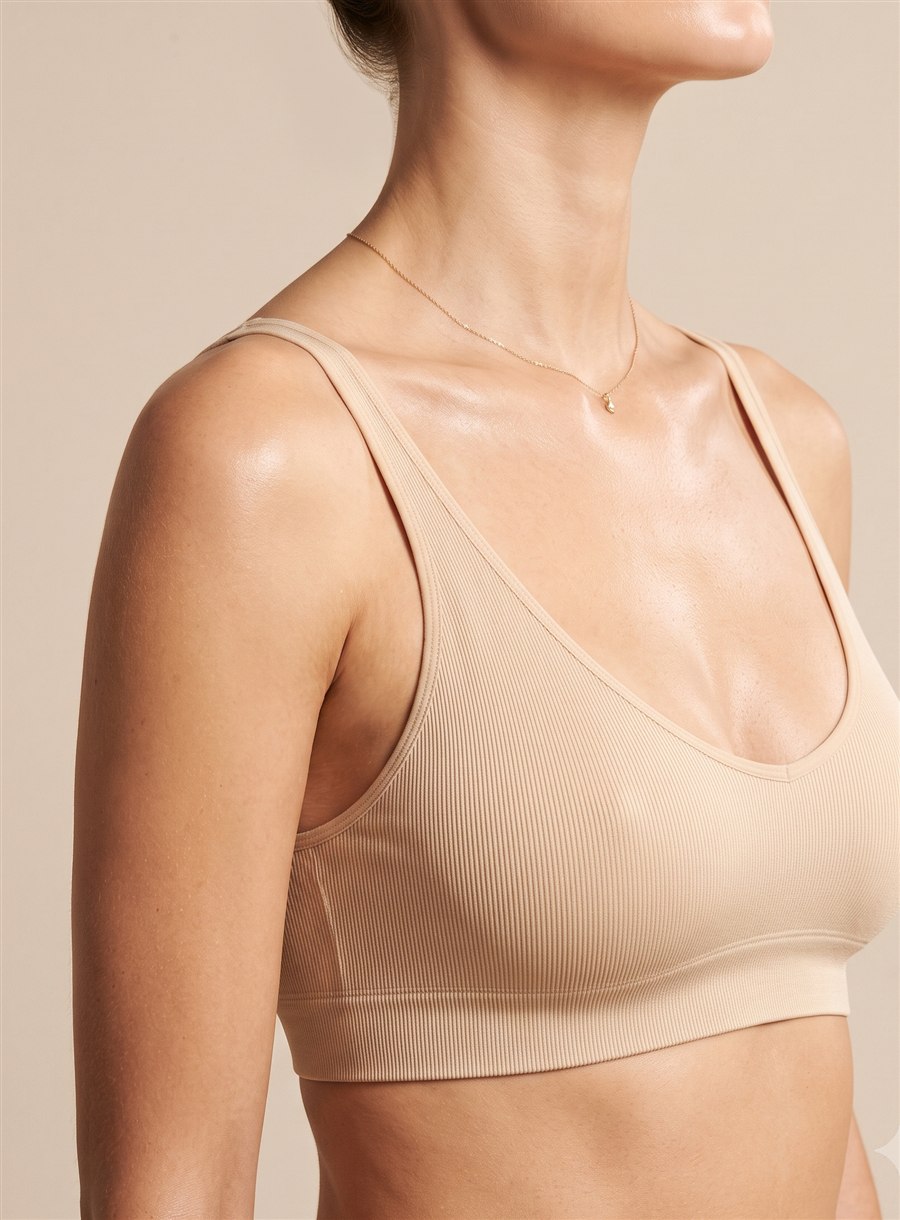
Elegant female bust in a soft neutral bralette — breast augmentation by Dr. Paulo Michels, Abu Dhabi

Overview

What is breast augmentation?

Breast augmentation (augmentation mammoplasty) increases breast size and improves breast shape, most commonly by placing a cohesive silicone gel implant behind the breast tissue or chest muscle. It restores volume lost after pregnancy or weight loss, corrects asymmetry, and balances the breast with your frame. It is one of the most performed and most studied aesthetic operations in the world — over 1.6 million were performed globally in 2024 (ISAPS).

What augmentation does not do is lift a sagging breast: an implant adds volume, but it cannot raise a nipple that sits below the fold. Significant sagging needs a lift, with or without an implant — assessed honestly at consultation.

Dr. Paulo Michels’ approach is bespoke proportion: the implant is chosen to fit you — your chest width, breast footprint and tissue — never the reverse. The goal is a result nobody can identify as surgery.

The philosophy

Proportion over volume — never “over-filled”

The commonest fear at consultation is not surgical risk — it is looking “done”. The whole approach is built against the over-filled, spherical, obviously artificial result that photographs badly and ages worse.

{{ic-wave}}

Chosen by measurement, not cup-size

Base width, tissue thickness, skin stretch and nipple-to-fold distance define the implants your anatomy can carry naturally. An implant wider than your breast footprint, or heavier than your tissue can hold, produces visible edges and faster sagging.

{{ic-heart}}

The upper-pole transition is the signature

The mark of a natural result is a smooth, anatomical slope from the chest into the breast — not a hard, convex shelf. The right result draws attention to you, not to the surgery.

The honest test: if a stranger can tell you had breast augmentation, the plan was wrong before the surgery started.

The most important step

Planning: 3D simulation & tissue-based measurement

The result is decided before the operating theatre. A breast augmentation planned on guesswork produces a generic breast; one planned on measurement produces your breast, enhanced. The consultation combines clinical examination, standardized measurement and 3D digital simulation.

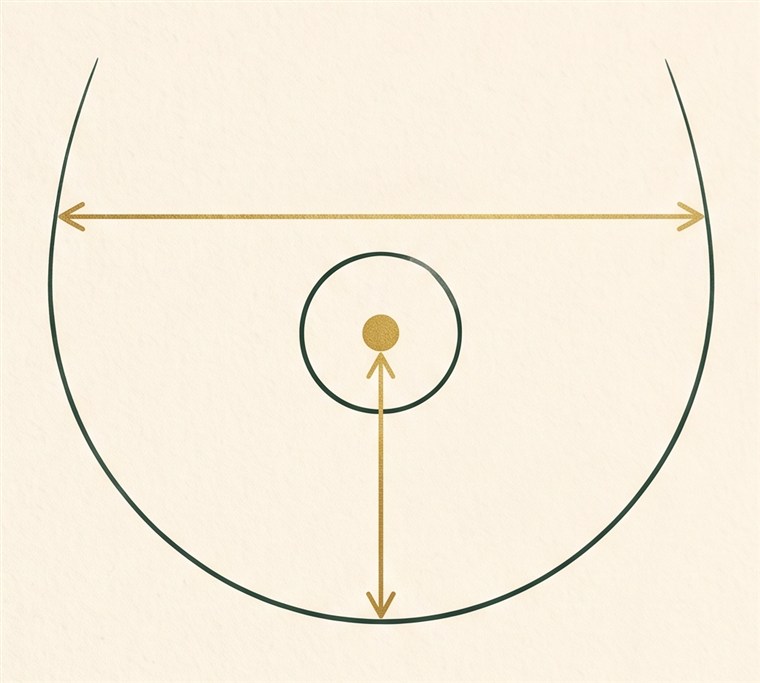
Biodimensional measurement captures what physically constrains the implant: your breast base width (the single most important number), soft-tissue pinch thickness (which determines the safest plane), skin stretch and nipple-to-fold distance, and your natural chest-wall asymmetries.

3D simulation then previews the result with different volumes and profiles — on your own body, from every angle. Instead of imagining “325 cc”, you see it. This is what makes the decision confident and shared, and it dramatically reduces the commonest regret in augmentation worldwide: a size that was never right.

Front-view breast diagram with biodimensional measurement markers: base width across and nipple-to-fold distance — measurement-based implant planning by Dr. Paulo Michels

The science of proportion

Choosing the implant: size, profile & shape

Implants are measured in cubic centimetres (cc), not cup sizes — as a rough guide, 150–200 cc is about one cup size, but it varies with your frame. Three variables are balanced against your measured anatomy.

VariableWhat it isWhy it matters
Volume (cc)The amount of gelDrives size — but volume without the right base width looks artificial
Base widthThe implant’s footprintMust respect your measured breast width; too wide creates side fullness and visible edges
Profile / projectionHow far it projects forwardHigher profile = more projection on a narrower base; matched to your chest and goals
Lo

Low profile

Wide base, minimal projection — for broad chest frames.

Mod

Moderate profile

Balanced base-to-projection — a natural, proportional slope.

Hi

High profile

Narrow base, maximum projection — a fuller look for narrow chests.

{{ic-layers}}

Round or anatomical (teardrop)?

Both are excellent in the right patient. Round gives more upper-pole fullness and cannot rotate; anatomical mimics the natural teardrop but needs precise pocket control. Modern ergonomic implants behave like a teardrop upright and a round lying down — following gravity like natural tissue.

{{ic-shield}}

The implant surface

Surface affects how tissue integrates with the device and is part of the safety conversation (see BIA-ALCL below). Dr. Paulo Michels works only with modern, low-risk surfaces and explains the evidence for each at consultation.

Where is the scar?

The incision

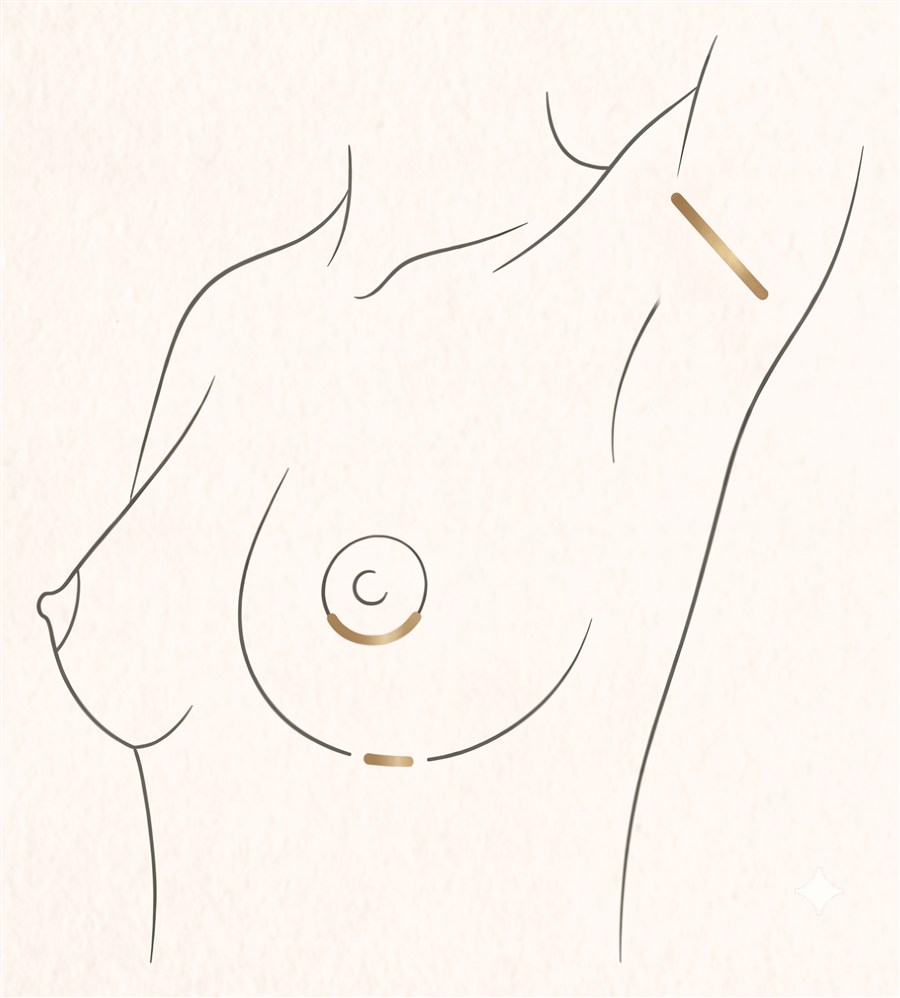
In most cases the incision is a 2–3 cm line in the inframammary fold — the natural crease under the breast — hidden in bras, bikinis and standing anatomy. The inframammary approach gives the best pocket control, direct visibility and the lowest published complication profile, which is why it is the preferred modern standard. Other approaches exist and are chosen case by case.

The incision is closed in layers and sealed with medical-grade surgical glue — waterproof from day one, antimicrobial and tension-relieving for the finest possible scar.

Breast marking the three incision options: inframammary fold (preferred), periareolar, and transaxillary (armpit)
IncisionInframammary (standard)PeriareolarTransaxillary
LocationIn the breast foldAround the areola edgeIn the armpit
Pocket controlBest, direct visionGoodLess direct
Through the gland/ductsNoYesNo
Best forMost patients, cohesive gelCase-selectedNo breast scar, case-selected

Where the implant sits

The pocket: dual plane explained

In dual plane, the upper part of the implant sits under the pectoralis muscle while the lower part sits behind the breast tissue. It combines muscle camouflage where the implant needs it (the visible upper pole) with natural shaping where the breast needs it (the lower pole) — the reference standard for a natural look, and Dr. Paulo Michels’ preferred technique for most patients.

Cross-section of the breast comparing implant placement under the muscle (submuscular / dual plane) versus over the muscle (subglandular)
PlanePositionBest forTrade-off
SubglandularBehind the gland, over the muscleThick natural tissueMore visible/palpable in thin patients
SubfascialUnder the pectoral fasciaSelected athletic patientsThin extra coverage
SubmuscularFully under the muscleMaximum coverageMore movement on flexing; tighter early recovery
Dual plane (preferred)Upper pole under muscle, lower behind glandMost patients — natural slope + soft lower poleRequires precise technique

Dual plane softens the transition at the top (no shelf), expands the breast naturally at the bottom, protects the implant against visibility and rippling, and gives superior long-term support. Formalized by Tebbetts (Plastic & Reconstructive Surgery, 2001), it is today the global reference for natural-look augmentation.

Serene luxury clinic suite at Dr. Paulo Michels' plastic surgery practice

Our philosophy

An implant that fits you — and holds its position for years.

Long-term support

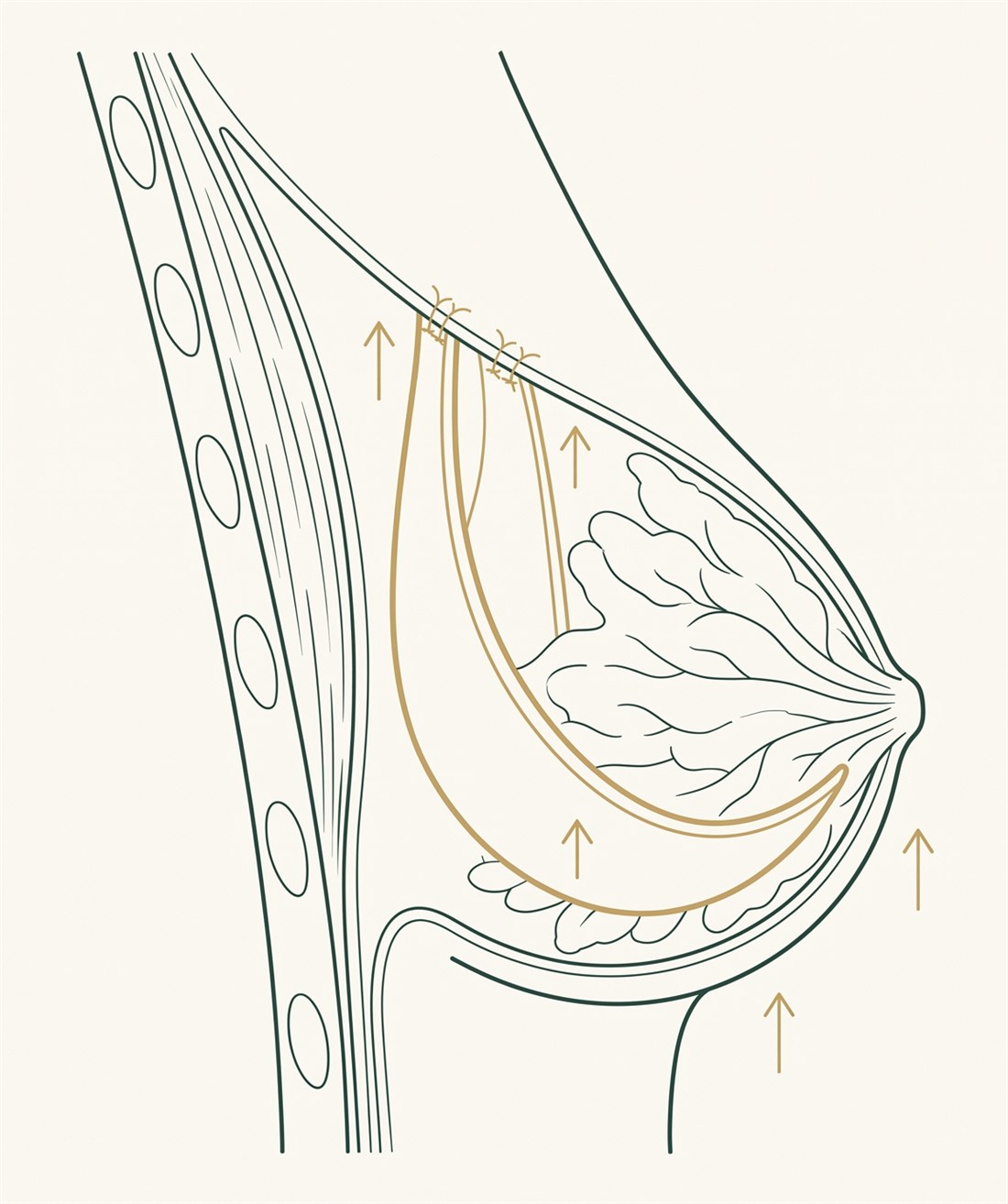
The internal bra: support sutured from the inside

Gravity is the enemy of every augmentation — not in year one, but in year five and ten. An implant that slowly descends below the fold (“bottoming out”) turns a beautiful early result into a revision case.

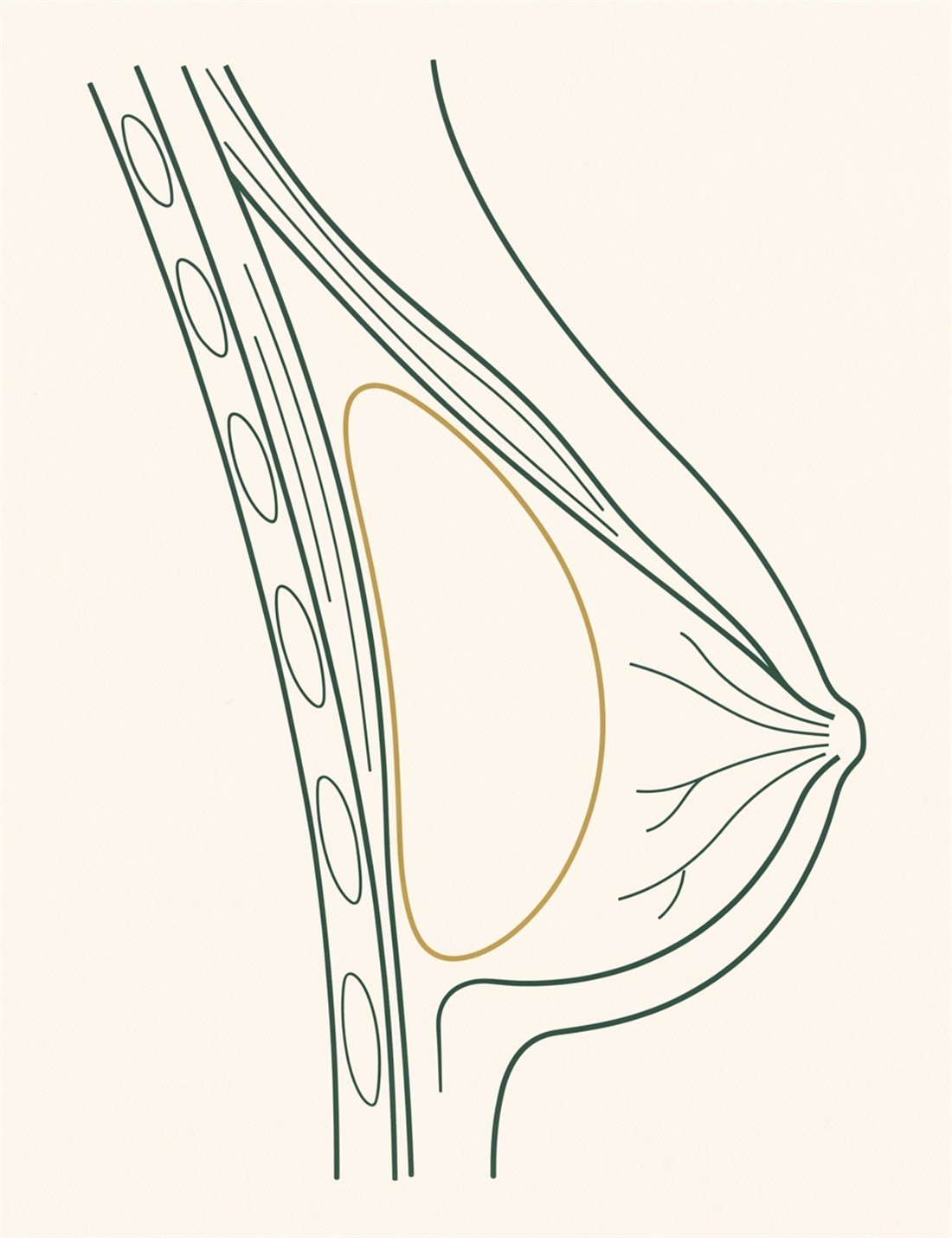
Dr. Paulo Michels counters this with an internal bra: advanced internal suturing that reinforces the inframammary fold and the lower pocket with your own tissue, creating a supportive shelf that holds the implant in its planned position. The fold does not migrate down, the nipple-to-fold proportion is preserved, and the risk of bottoming out and lateral drift — two of the commonest reasons for revision worldwide — is structurally reduced.

It is invisible work that adds operative time and demands precision — the detail that separates a result that looks good at 6 weeks from one that still looks right at 10 years.

Breast in profile: an internal support band of the patient's own tissue reinforcing the inframammary fold to hold the implant in position

Going further

Hybrid augmentation & when a lift is needed

The modern direction of breast surgery: the implant as the engine, your own tissue as the finish.

{{ic-recycle}}

Hybrid: implant + fat grafting

A silicone implant combined with your own fat, harvested by liposuction and layered over the implant. The implant gives structure and volume; the fat softens edges, deepens cleavage and perfects the transition. Ideal for thin patients at risk of visible edges, for cleavage refinement, and for millimetric asymmetry correction — and the donor area (waist, flanks) is refined at the same time.

{{ic-shield}}

Do I need a lift as well?

If your nipple sits at or below the fold when standing, an implant alone cannot correct the sagging — forcing it to produces a heavy, low “rock in a sock” result. That needs an augmentation-mastopexy (implant + lift), covered on its own page. The mirror test with measurements decides it honestly at consultation.

Recovery

The fast-recovery protocol: back to life in 24–48 hours

Most patients raise their arms overhead in the recovery room, go home the same day, and return to light normal activities — driving, office work, dining out — within 24–48 hours. This is not marketing: it is the published outcome of a specific method (Tebbetts & Adams, Plastic & Reconstructive Surgery, 2002/2006).

{{ic-wave}}

The dissection

Atraumatic, bloodless technique

The pocket is created with precise electrocautery under direct vision — not blunt force. Minimal tissue trauma means minimal inflammation, which means minimal pain. The muscle is handled surgically, not torn.

{{ic-heart}}

The comfort

Ultrasound-guided nerve blocks

Long-acting blocks of the chest-wall nerves, placed under ultrasound while you sleep, replace sharp pain with a manageable tightness — the feeling of a strong workout. Opioid use drops sharply: less nausea, faster mobilization.

{{ic-shield}}

The mindset

Immediate normal movement

No drains in routine primary augmentation. You are instructed to move your arms normally and lift them overhead from day one. Early movement prevents stiffness and speeds recovery — you wake as a healthy woman who had a procedure, not a patient.

See your result before you decide anything

Book a 3D planning consultation with Dr. Paulo Michels — measured, simulated and honest, so the decision is yours and clear.

Timeline

Recovery, week by week

Implants ride slightly high at first and settle progressively (“drop and fluff”). Early normal arm movement is encouraged throughout.

  1. Day 0

    Same-day discharge for most. Arms move normally — reaching overhead is allowed and encouraged. Tightness and pressure, not sharp pain; simple analgesics. Waterproof glued incision — you can shower.

  2. Days 1–2

    Light daily life resumes — driving, desk work, dining out. Sleep on your back, slightly elevated.

  3. Weeks 2–4

    Lower-body gym resumes (legs, glutes, bike) — no chest, no heavy lifting. Implants still settling; social and professional life fully normal.

  4. Weeks 4–6

    Upper-body and chest training reintroduced progressively with clearance. Any temporary changes in nipple sensation typically improving.

  5. Months 3–6

    Final result: implants settled into the fold, soft lower pole, natural movement. Scar in active maturation — silicone protocol and strict sun protection.

Candidacy

Am I a good candidate?

  • Breasts that feel too small for your frame, or volume lost after pregnancy or weight loss
  • Asymmetry in size, shape or fold position that bothers you
  • Fully developed breasts and a stable weight
  • Non-smoker, or able to stop nicotine 4–6 weeks before and after
  • Medically fit, with realistic, proportional expectations

Honest disclosure

When it is “no” or “not yet”

  • Active smoking the patient will not pause — higher infection and contracture risk
  • Pregnancy or active breastfeeding — wait 3–6 months after breastfeeding ends
  • Significant untreated sagging where a needed lift is declined
  • Uncontrolled medical conditions or unstable weight
  • Expectations no surgery can meet; active breast disease is investigated first

Saying “no” or “not yet” when needed is a safety standard — not a sales technique. Patients over 40, or with a family history, complete breast imaging before elective surgery.

The honest, complete list

Risks & complications

Breast augmentation is one of the most studied procedures in medicine, with decades of published data. Nothing here is hidden; all of it is reviewed personally at consultation and documented in bilingual English–Arabic informed consent.

Early & over time

Surgical & implant risks

  • Hematoma (bleeding around the implant) — around 1% in published series; treated promptly
  • Infection — roughly 1% in primary aesthetic augmentation; minimised by hospital sterility and no-touch handling
  • Capsular contracture — the capsule tightens the breast in a small minority; modern surfaces show published rates around 1% vs historic rates above 10%
  • Rupture — modern cohesive gel ruptures rarely (well under 1% per year); often silent, which is why surveillance matters
  • Rippling / visibility — mainly in very thin patients; reduced by dual plane and hybrid fat
  • Malposition (bottoming out, drift) — countered structurally by the internal bra

The rare, important conversations

BIA-ALCL & BII

BIA-ALCL is a rare, highly treatable lymphoma of the capsule associated overwhelmingly with textured implants (estimates roughly 1 in 2,200 to 1 in 86,000 textured-implant patients); the ASPS notes no confirmed cases involving only smooth implants. Surface choice and this evidence are reviewed openly with every patient.

Breast implant illness (BII) describes systemic symptoms some women attribute to implants. It is not a formally defined disease and research is ongoing, but the FDA requires it in informed consent, and Dr. Paulo Michels treats it as a legitimate conversation — including that most patients who choose removal report symptom improvement. Informed consent means all the information.

The 10-year myth

How long do implants last?

The “replace every 10 years” rule is a myth — there is no medical requirement to exchange implants on a schedule. Modern implants are exchanged only for a reason: rupture, contracture, or a wish to change size or remove them. Many women keep the same implants comfortably for 15–20 years or more.

What implants do require is surveillance. They are not lifetime devices — plan for the possibility of another surgery at some point. Ultrasound or MRI screening of silicone implants starts around 5–6 years, then every 2–3 years (FDA guidance), because ruptures can be silent. Any change in shape, size or feel earns an ultrasound at any time.

Life with implants

Breastfeeding, mammograms, pregnancy, sport

Breastfeeding: most women breastfeed normally. The inframammary incision avoids the gland and ducts, and dual plane places the implant behind — not inside — the breast tissue.

Mammograms: unaffected — radiologists use implant-displacement (Eklund) views; implants do not cause breast cancer or prevent its detection, and screening schedules are unchanged.

Pregnancy: safe after augmentation; the breast changes and the result may shift, occasionally motivating a later touch-up. Sport: after full recovery there are essentially no restrictions — training, running, swimming, diving and flying are all compatible.

Comparative clarity

Augmentation vs the alternatives

The honest options are implants, fat, both — or embracing your natural size. No cream, supplement or filler produces a safe, lasting augmentation.

 ImplantsFat transfer aloneHybrid (implant + fat)
Volume gainPredictable, larger~½–1 cupLarger + natural cover
Upper-pole fullnessYesLimitedYes
FeelNatural (well-planned)Very naturalVery natural
Best forMost patientsSmall change, good tissueThin patients wanting volume + softness

Sagging with volume loss usually needs a lift as well (augmentation-mastopexy). A “mommy makeover” combines breast surgery with a tummy tuck and liposuction in one recovery.

Investment

How is the cost determined?

Pricing is fully personalised, because the correct plan varies genuinely from patient to patient. The main factors:

The clinic delivers an all-inclusive surgical package with full pricing transparency at consultation. In line with UAE medical-advertising regulations, prices are shared privately rather than published.

FAQ

Breast augmentation, answered

Will my breast implants look natural?

Yes — when the implant respects your anatomy. A personalised measurement system and 3D simulation select an implant that fits your chest precisely, placed in a dual plane for a smooth, sloped upper pole. The philosophy is elegant and proportional, never over-filled.

How do I choose my implant size?

By measurement and simulation, not guesswork. Your breast base width and tissue thickness define the safe range; 3D imaging then shows realistic previews of different volumes on your own body. As a rough guide, 150–200 cc is about one cup size.

What is dual plane breast augmentation?

Dual plane places the upper part of the implant under the pectoralis muscle and the lower part behind the breast tissue. It combines muscle camouflage of the upper pole (no artificial shelf) with natural shaping of the lower pole — the reference technique for natural-looking results.

Where will my scar be?

In most cases a 2–3 cm incision hidden in the fold under the breast (inframammary), invisible in bras and bikinis. Closed with layered sutures and surgical glue, it typically matures into a fine, discreet line within 12–18 months.

What is the internal bra?

An advanced internal suturing technique that reinforces the breast fold and lower pocket with your own tissue, creating a support that keeps the implant in position long-term. It reduces bottoming out and drift — two of the commonest reasons for revision.

What is hybrid breast augmentation?

A silicone implant combined with fat grafting from your own body. The implant provides volume and structure; the fat softens edges and deepens cleavage. It is ideal for thin patients and for refined, natural transitions.

How painful is it, and how fast is recovery?

With ultrasound-guided nerve blocks and atraumatic technique, most describe tightness rather than sharp pain — like an intense chest workout. Most return to light activities within 24–48 hours, lower-body gym at ~2 weeks and chest training at 4–6 weeks; implants settle over 3–6 months.

Do breast implants need to be replaced every 10 years?

No — that is a myth. There is no mandatory schedule. Implants are exchanged only for a reason (rupture, contracture, size change). They do require surveillance: ultrasound or MRI from about 5–6 years, then every 2–3 years, per FDA guidance.

Can I breastfeed after breast augmentation?

Most women breastfeed normally. The inframammary incision avoids the gland and milk ducts, and dual plane places the implant behind — not inside — the breast tissue. No research has shown silicone implants to be harmful to a nursing infant.

Can I still have mammograms with implants?

Yes. Radiologists use implant-displacement (Eklund) views to image the breast fully. Implants do not cause breast cancer or prevent screening — follow the same schedule as women without implants and inform the imaging team beforehand.

What is capsular contracture?

Tightening of the natural scar capsule around an implant, making the breast feel firm or look distorted. With the modern implant surfaces used here, published rates in primary augmentation are around 1% — versus over 10% with earlier-generation devices.

What is BIA-ALCL, and should I worry?

A rare, treatable lymphoma of the implant capsule associated overwhelmingly with textured implants (estimated 1 in 2,200 to 1 in 86,000 textured-implant patients). The ASPS reports no confirmed cases involving only smooth implants. Surface choice and this evidence are discussed openly at consultation.

Round or teardrop implants — which is better?

Neither universally. Round gives more upper-pole fullness and cannot rotate; anatomical mimics the natural slope. Modern ergonomic implants behave like a teardrop upright and a round lying down. The choice is made from your anatomy and 3D simulation.

Do I need a breast lift with my implants?

If your nipple sits at or below the fold when standing, an implant alone cannot correct the sagging — you need an augmentation-mastopexy (implant + lift). This is assessed with measurements at consultation, and you are always told honestly which operation your anatomy needs.

Can implants correct asymmetry?

Yes — it is a core indication. Options include different implant sizes per side, hybrid fat grafting for millimetric refinement, or a lift on one side only. Perfect symmetry is never guaranteed, but meaningful improvement is the norm.

I had implants placed elsewhere and I’m unhappy — can they be revised?

Yes. Revision augmentation is performed for capsular contracture, malposition, rippling, size change or implant exchange — including complex cases using polyurethane-surfaced implants, which show among the lowest published contracture rates in revision settings.

Enquiry

Ask about Breast Augmentation

Leave your details and Dr. Paulo Michels’ team will reply personally — or message on WhatsApp.

Your details are used only to respond to your enquiry.