☎ +971 50 106 7981·WhatsApp·Elyzee Hospital, Abu Dhabi

Body Contouring · Abu Dhabi & Dubai

Tummy Tuck & Muscle Repair

Abdominoplasty does what liposuction cannot — it removes stretched, excess skin and rebuilds the separated abdominal muscles into a firm, flat wall. The definitive answer after pregnancy or major weight loss.

  • {{ic-shield}}Muscle wall
    repaired
  • {{ic-award}}ISAPS · ASPS
    SBCP · EPSS
  • {{ic-heart}}Comfort-first
    recovery
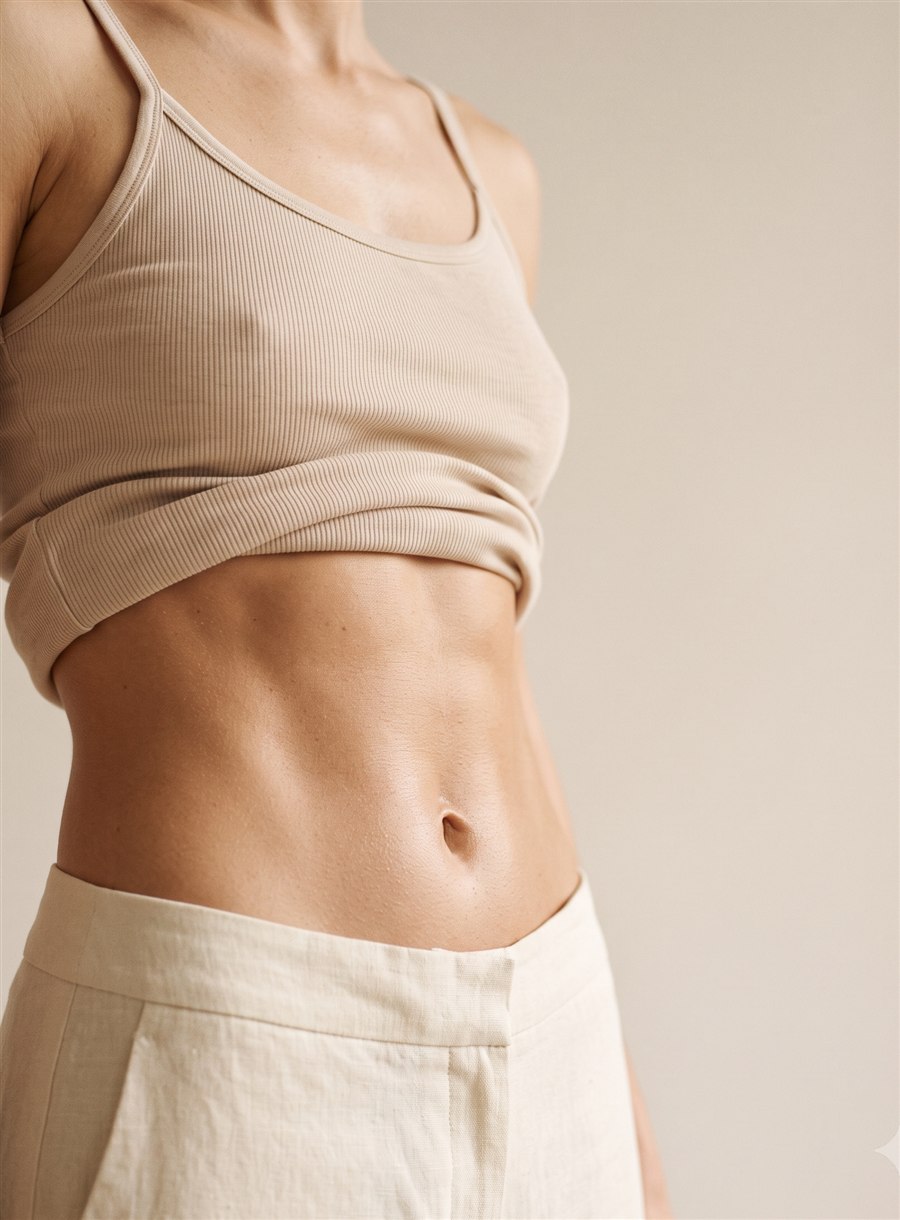
Flat, toned female abdomen after abdominoplasty by Dr. Paulo Michels, Abu Dhabi

Overview

What is a tummy tuck (abdominoplasty)?

A tummy tuck does two things liposuction never can: it removes excess, stretched skin and it repairs the abdominal muscle wall. For many patients — especially after pregnancy or major weight loss — the problem is not fat at all. It is loose skin that will not shrink, and abdominal muscles that have separated and no longer hold the belly flat.

Through a low, well-hidden incision, the loose skin is removed, the muscles are stitched back into a firm sheet (plication), and the remaining skin is redraped smooth and tight. It is frequently combined with VASER liposuction of the flanks for a complete waistline — a lipoabdominoplasty.

It is a genuine surgical reconstruction of the abdominal wall, not a shortcut. The reward is a flat, firm abdomen that diet and training alone could never restore — and a result that is long-lasting with a stable weight.

The honest science

Why a flat stomach after pregnancy is a muscle problem — not a fat problem

The single most common reason a slim, fit woman still has a rounded lower belly is not fat, and not loose skin. It is the muscle wall itself — and no diet, plank or liposuction can fix it.

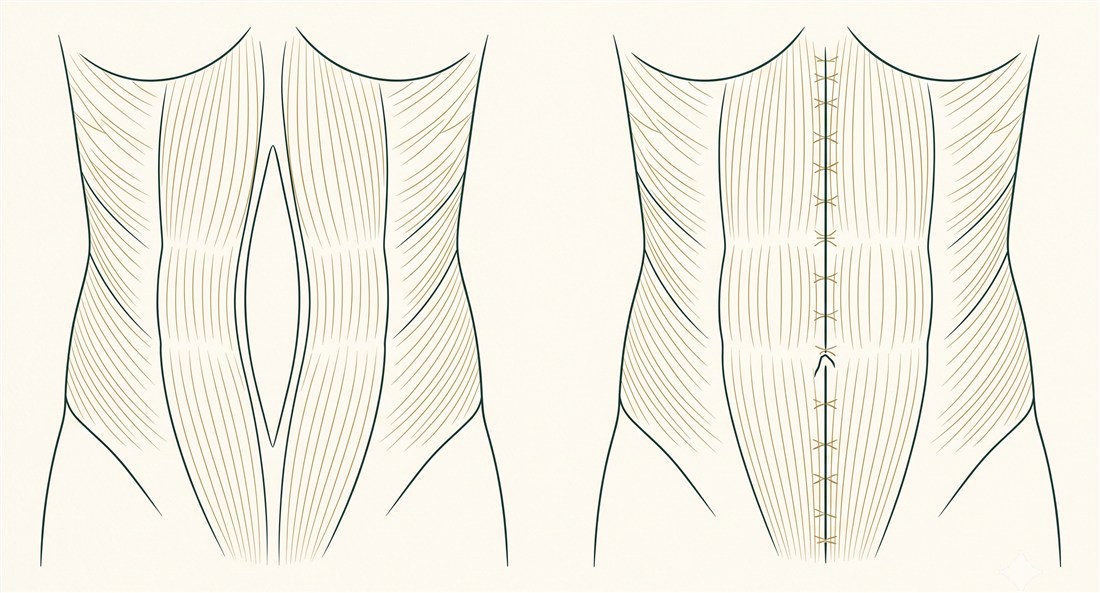
Diagram of diastasis recti: separated rectus muscles on the left, repaired with plication on the right
{{ic-core}}

Diastasis recti

During pregnancy the two vertical “six-pack” muscles (the rectus) are pushed apart — a separation called diastasis recti. Once separated, they no longer hold the abdominal wall flat, so the tummy bulges outward from the inside, even in a slim, trained woman. A true diastasis does not close with core exercise.

{{ic-shield}}

Muscle repair (plication)

The separated muscles are stitched back together into a firm midline sheet, rebuilding an internal corset. Both a full tummy tuck and MILA perform this same muscle repair — liposuction alone cannot. What decides between them is the skin: a tummy tuck also removes excess loose skin, while MILA relies on the skin retracting on its own.

At consultation, Dr. Paulo Michels examines your abdominal wall directly to measure the separation. If your concern is muscle and skin — not fat — you are told so honestly, because it changes which procedure is right for you.

The key decision

Liposuction, MILA, or a full tummy tuck?

The most-asked question online is “which one do I need?”. It comes down to three things: fat, loose skin, and muscle separation. Here is the honest comparison.

 LiposuctionMILAFull Tummy Tuck
Removes fatYesYesYes (+ lipo)
Removes loose skinNoNoYes
Repairs separated muscleNoFull (same as tummy tuck)Full plication
ScarTiny portsSame as liposuctionLow, hip-to-hip
Downtime14 days14 days14 days
Best forOnly fat, no muscle diastasisFat + muscle diastasis + mild skin laxityFat + muscle diastasis + moderate–severe skin laxity

Post-pregnancy tummies with real muscle separation and moderate-to-severe loose skin almost always need a full tummy tuck, because the excess skin has to be removed. When the muscle separation is present but skin laxity is only mild, MILA can repair the muscle and sculpt the fat through liposuction incisions alone — no skin removal and no tummy-tuck scar.

Calm luxury recovery lounge at Dr. Paulo Michels' plastic surgery clinic

Our philosophy

A flat abdomen is rebuilt — not just tightened.

Tailored to you

The types of tummy tuck — and who each suits

A tummy tuck is not one operation. The right version depends on how much loose skin you have, where it sits, and whether the muscle needs repair.

{{ic-layers}}

Most common

Full abdominoplasty

Removes excess skin from above and below the navel, repairs the full length of the muscle separation, and repositions the belly button. The complete answer for post-pregnancy or post-weight-loss abdomens with loose skin and diastasis. Almost always combined with liposuction of the flanks for a defined waist.

{{ic-waist}}

Less skin, lower scar

Mini tummy tuck

For laxity limited to below the navel, with little or no upper-abdomen skin. A shorter scar, no repositioning of the belly button, and a faster recovery — but it treats less. Suitable only when the excess is genuinely confined to the lower abdomen.

{{ic-recycle}}

After major weight loss

Extended & fleur-de-lis

When skin laxity extends around to the flanks and back, or when there is a vertical excess as well as horizontal, the incision is extended (or a discreet vertical component is added) to remove it. Common after significant weight loss or bariatric surgery.

{{ic-wave}}

Sculpted, not just flat

Lipoabdominoplasty

A tummy tuck combined with VASER liposuction of the flanks, upper abdomen and back in the same session. This is the modern standard here: the skin and muscle are corrected and the whole waistline is sculpted, for a defined result rather than merely a flat one.

Honest answer

Where is the scar — and how visible is it?

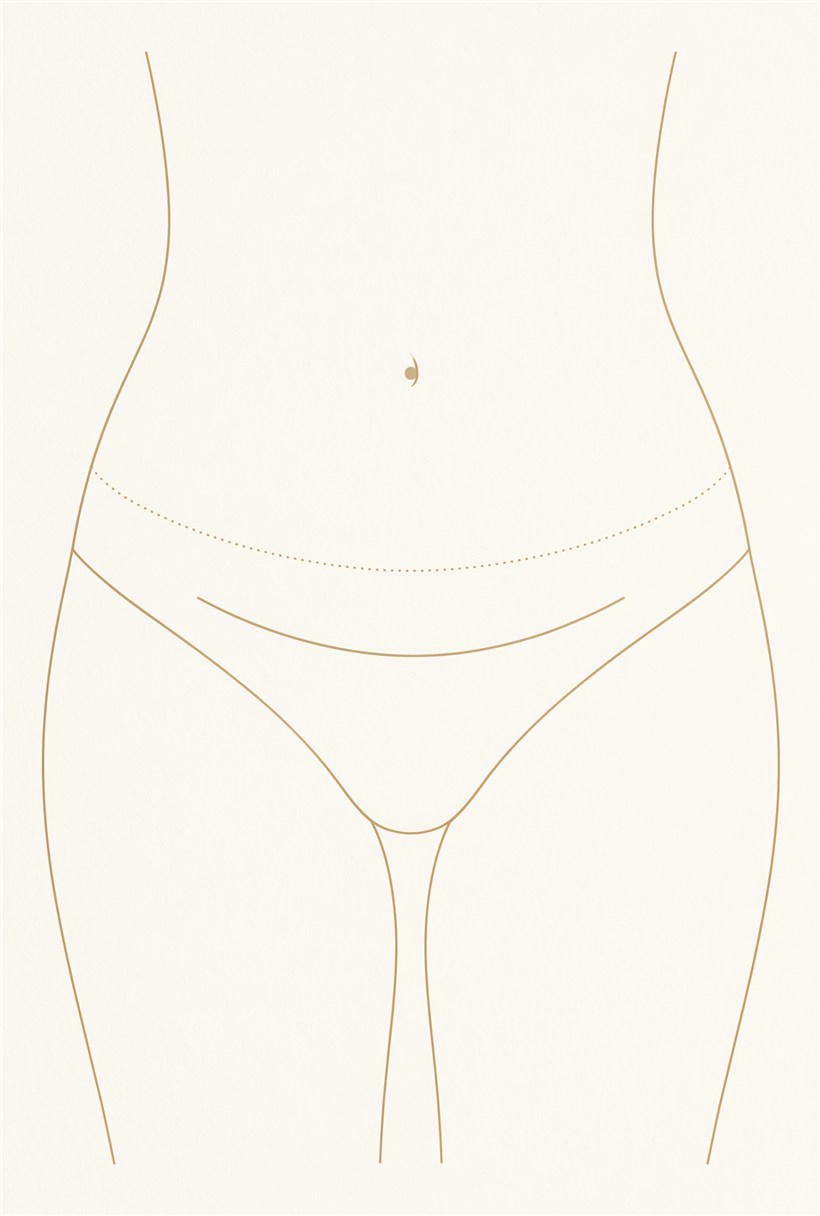
A tummy tuck leaves a permanent scar. There is no honest way around that — so the goal is to place it where clothing hides it and to refine it as much as possible. The incision sits low across the lower abdomen, hip to hip, positioned to fall beneath underwear and most bikini lines. The belly button is brought out through a small, discreet new opening.

Scars mature over 12–18 months, fading from pink to pale. A structured scar programme — silicone, tape and, where useful, in-clinic treatments — is part of your aftercare. Most patients consider a low, hidden line a fair exchange for an abdomen that is finally flat and firm.

Diagram of the low hip-to-hip tummy tuck incision sitting below the bikini line

Ready for a flat, firm abdomen again?

Book a private consultation with Dr. Paulo Michels — an honest assessment of your skin, muscle and options, with a plan built around your body.

Recovery

What is recovery like, week by week?

A tummy tuck asks more of you than liposuction — the muscle repair needs time to heal. Ultrasound-guided nerve blocks keep the first days far more comfortable than most expect.

  1. Day 0–3

    One to two nights in hospital. You walk (slightly bent to protect the repair) from day one. Small drains and a compression garment are placed. Discomfort is managed and eased by the nerve blocks.

  2. Week 1–2

    Drains are removed as they slow. Most people return to desk work around two weeks. You stand progressively straighter as the repair settles.

  3. Week 2–6

    Garment worn continuously. No heavy lifting or straining — the muscle repair is consolidating. Gentle walking increases steadily.

  4. Week 6–8

    Core and light exercise resume, building back to full training. The abdomen already looks transformed, though still refining.

  5. Months 6–12

    Swelling fully resolves and the scar matures and fades. The final, definitive contour settles in.

Candidacy

Am I a good candidate?

  • Loose abdominal skin and/or separated muscles (often post-pregnancy or weight loss)
  • At or near a stable weight — and not planning further pregnancies
  • Non-smoker, or able to stop well before and after surgery
  • In good general health, with realistic expectations
  • Understand and accept a low, hidden but permanent scar

Honest risks

What are the risks?

  • A permanent scar (placed low and refined over time)
  • Fluid collection (seroma) — reduced with drains and garment
  • Swelling and temporary numbness of the lower abdomen
  • Delayed wound healing, especially in smokers
  • Blood clots (DVT) — minimised by early walking and prophylaxis

Patient stories

In their words

RA
R. A.Abu Dhabi
“Two pregnancies left a gap I could never train away. For the first time in years my stomach is flat — and firm.”
Lipoabdominoplasty
NK
N. K.Dubai
“He explained the muscle repair clearly and was honest about the scar. It sits right under my bikini line.”
Full Tummy Tuck
SH
S. H.Sharjah
“After losing 30 kg the loose skin was the last hurdle. The recovery was easier than I feared.”
Extended Abdominoplasty

Investment

How is the cost determined?

Because every abdomen is different, there is no single price. A personalised quotation follows an in-person assessment. The main factors:

In line with UAE medical-advertising regulations, prices are shared privately in consultation rather than published.

FAQ

Tummy tuck, answered

What is the difference between a tummy tuck and liposuction?

Liposuction only removes fat. A tummy tuck removes excess, stretched skin and repairs separated abdominal muscles. If your concern is loose skin or a post-pregnancy bulge that persists despite being slim, liposuction alone will not fix it — you need skin removal and muscle repair.

Will a tummy tuck fix diastasis recti (ab separation)?

Yes — this is one of its main purposes. The separated rectus muscles are stitched back together (plication), rebuilding a firm midline. A true diastasis does not close with core exercise, so surgical repair is the definitive solution.

How big is the scar and where does it sit?

The scar runs low across the lower abdomen, hip to hip, positioned to hide under underwear and most bikini lines. It is permanent but fades over 12–18 months and is supported by a structured scar-care programme.

Mini vs full tummy tuck — which do I need?

A mini tummy tuck treats laxity only below the navel, with a shorter scar and no muscle repair above the navel. A full tummy tuck addresses the whole abdomen and repairs the full muscle separation. Most post-pregnancy abdomens need a full tummy tuck; the assessment confirms which is right.

Can it be combined with liposuction?

Yes — this is the modern standard, called lipoabdominoplasty. VASER liposuction of the flanks, upper abdomen and back is performed in the same session so the whole waistline is sculpted, not just flattened.

How painful is recovery, and how long does it take?

Ultrasound-guided nerve blocks placed during surgery keep the first days far more comfortable than expected. Most return to desk work around two weeks and to exercise at 6–8 weeks; the muscle repair needs six weeks of care before heavy loading.

Should I have a tummy tuck before or after having more children?

After. A future pregnancy can stretch the skin and re-separate the repaired muscles, undoing the result. It is best to complete your family first, then have the tummy tuck.

Do I need to reach my target weight first?

Ideally yes. A tummy tuck reshapes; it is not a weight-loss operation. Being at or near a stable target weight gives the best, most durable result and a safer procedure.

What is MILA, and is it an alternative to a tummy tuck?

MILA (Minimally Invasive Lipo-Abdominoplasty) combines high-definition liposuction with a full repair of the separated muscles — the same muscle repair as a tummy tuck — but performed through liposuction incisions only, with no skin removal and no scar. It suits patients whose muscle separation and fat need correcting but whose skin laxity is only mild, so the skin retracts on its own. When skin laxity is moderate to severe, the excess skin must be removed and a full tummy tuck is needed.

Can a hernia be repaired at the same time?

Often yes. An umbilical or small ventral hernia can frequently be addressed during the same operation, since the abdominal wall is already exposed. This is assessed and planned at consultation.

Enquiry

Ask about Tummy Tuck

Leave your details and Dr. Paulo Michels’ team will reply personally — or message on WhatsApp.

Your details are used only to respond to your enquiry.