The Journal · Body contouring
Liposuction or tummy tuck: which one do I actually need?
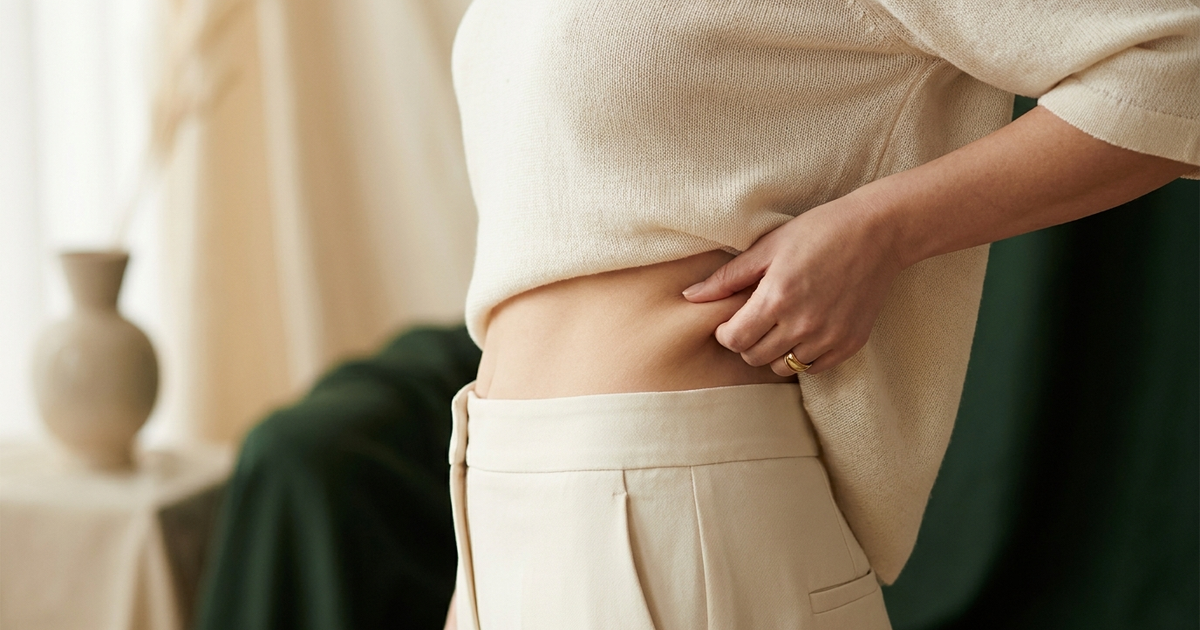
The short answer: liposuction removes stubborn fat — and nothing else. A tummy tuck removes loose skin, repairs separated abdominal muscles and removes fat as well. If your problem is fat alone, liposuction is enough. If pregnancy or weight loss left you with loose skin or a muscle-wall bulge, you need a tummy tuck — or MILA, the option in between.
What does each procedure actually do?
Liposuction sculpts the subcutaneous fat — the layer that sits between the skin and the muscle. With VASER ultrasound, real-time guidance and subdermal plasma to help the skin retract, it refines the waist, abdomen, flanks and thighs. What it never does is repair muscle or remove skin: no cannula can stitch a separated muscle wall back together or cut away an apron of stretched skin.
A tummy tuck (abdominoplasty) does the two things liposuction cannot. Through a low, hidden incision it removes the excess, stretched skin and stitches the separated abdominal muscles back into a firm sheet — a repair called plication — then redrapes the remaining skin smooth and tight. It is frequently combined with VASER liposuction of the flanks in the same operation, a lipoabdominoplasty, for a complete waistline.
How do I know which one my body needs?
Three questions decide it — the same three Dr. Paulo Michels examines at consultation:
- Is it fat? If what bothers you pinches as a soft layer between your fingers and your skin is reasonably firm, that is subcutaneous fat — liposuction territory.
- Is it loose skin? If the skin itself hangs, folds over or is etched with stretch marks, no amount of fat removal will tighten it. Genuinely excess skin has to be removed — and that is a tummy tuck.
- Is it muscle separation? During pregnancy the two vertical “six-pack” muscles are pushed apart — diastasis recti. The result is a rounded lower belly that persists even in slim, fit women and does not close with core exercise. Only a surgical repair — plication — rebuilds the internal corset, and liposuction cannot touch it.
The commonest mistake is treating a muscle-and-skin problem with liposuction. Removing fat over separated muscles leaves the bulge behind — sometimes looking worse, because there is less padding to disguise it.
What is MILA — the option in between?
Many post-pregnancy abdomens sit between the two classic answers: real muscle separation, but skin laxity that is only mild. For them Dr. Paulo Michels performs MILA — Minimally Invasive Lipo-Abdominoplasty. MILA performs the same complete muscle repair as a tummy tuck, closing the diastasis fully — but through the same tiny incisions as liposuction. No skin is removed, so there is no tummy-tuck scar; VASER and plasma energy tighten the skin so it retracts on its own.
The honest boundary: MILA only works when the skin will retract. With a moderate-to-severe amount of loose skin, the excess must be physically removed, and a full tummy tuck is the truthful answer.
How different are the recoveries?
- Liposuction: desk work in about 5–7 days, exercise at around 3–4 weeks, a compression garment for 6–8 weeks.
- MILA: desk work at around one week, exercise building back at 4–6 weeks, compression for 4–6 weeks — the muscle repair is protected without an open incision to heal.
- Tummy tuck: desk work at around two weeks, exercise at 6–8 weeks, compression for 6 weeks — the fuller operation, and the fuller recovery.
How is the decision made in Abu Dhabi & Dubai?
Not from photos — from an examination. Dr. Paulo Michels operates at Elyzee Hospital in Abu Dhabi and treats patients from both Abu Dhabi and Dubai. At consultation he examines the abdominal wall directly to measure any muscle separation, pinch-tests the skin to judge how much would retract, and maps where the fat actually sits — then tells you plainly which procedure your tissue needs. Cost depends on factors such as which procedure is right, how many areas are treated and whether procedures are combined in one session — all discussed transparently at consultation.
The honest version
Let the tissue decide
Choosing the procedure you would prefer — usually the one with the smallest scar — rather than the one your tissue needs is the fastest route to disappointment. The examination decides: fat alone means liposuction; muscle separation with mild laxity means MILA; moderate-to-severe loose skin means a tummy tuck. An honest surgeon tells you which one before any decision is made.
Frequently asked questions
Can liposuction tighten loose skin?
Only to a limited degree. Subdermal plasma energy helps mild-to-moderate laxity retract onto the new contour, but genuinely loose, excess skin can only be treated by removing it as part of a tummy tuck.
Will exercise close my muscle separation?
No. A true diastasis recti does not close with core exercise. The repair is surgical plication — stitching the muscles back together — performed in a full tummy tuck or through liposuction incisions with MILA.
Can liposuction and a tummy tuck be done together?
Yes, frequently. A tummy tuck is often combined with VASER liposuction of the flanks in the same operation — a lipoabdominoplasty — so the waist is defined at the same time as the abdomen is flattened.
Do all post-pregnancy tummies need a full tummy tuck?
No. If the problem is fat alone, liposuction is enough. If there is muscle separation with only mild skin laxity, MILA can repair the muscle without removing skin. Moderate-to-severe loose skin needs a full tummy tuck.
Read more: Liposuction for women · MILA · Tummy tuck · Book a consultation